Nov
16
2026
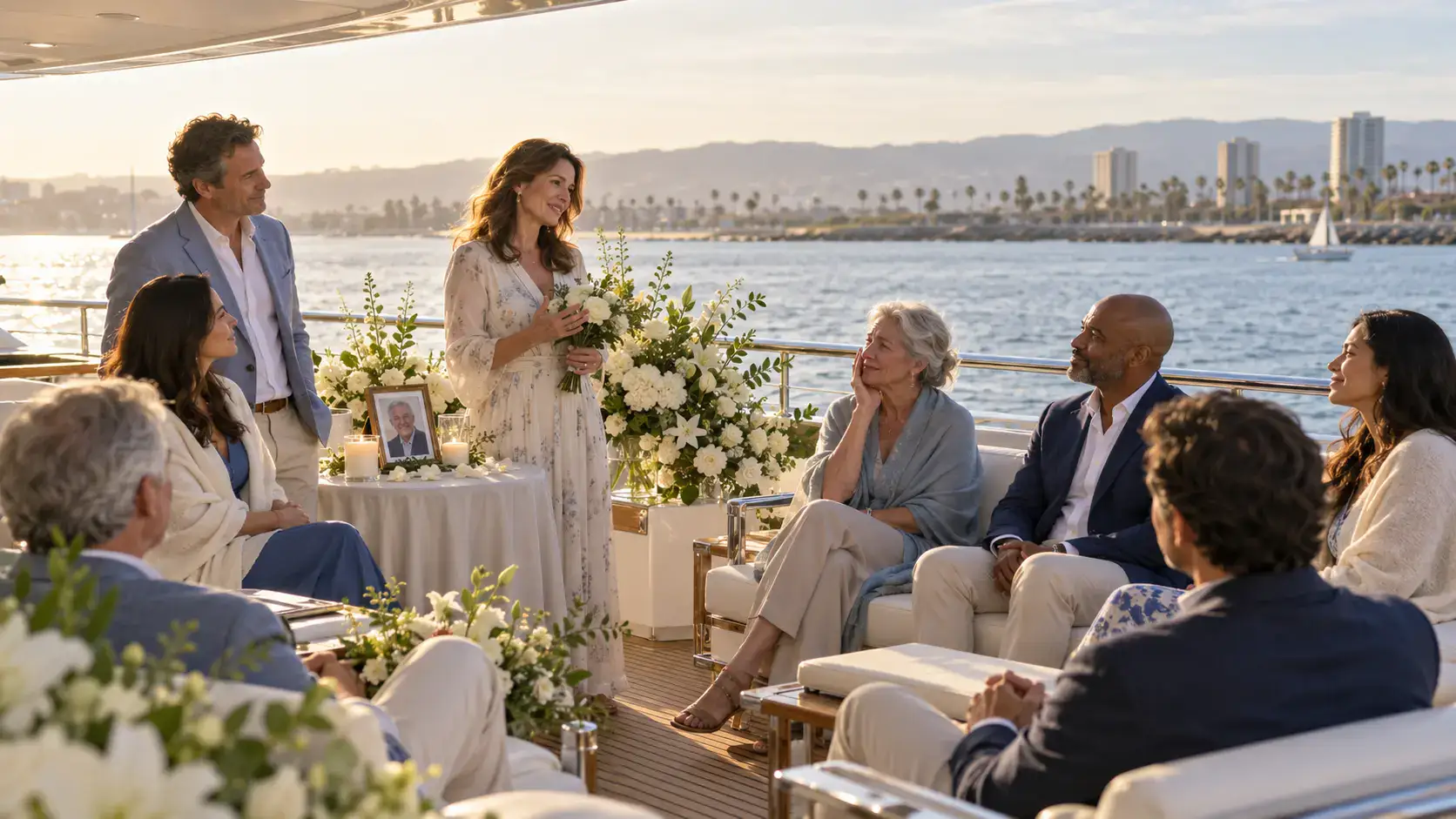
The best celebration of life ideas replace the formality of a funeral with the personality of the person you are honoring: their music, their food, their favorite view, and their stories told out loud. A celebration of life is an informal, usually non-religious gathering that can happen anywhere — a backyard, a restaurant, a hiking trail, or a private yacht — and it often takes place weeks after the death rather than days. With roughly two in three American families now choosing cremation, there is more freedom than ever to decide where and how to gather. This guide covers 12 ideas, a side-by-side comparison with a traditional funeral, and a seven-step plan.
What Is a Celebration of Life, and How Is It Different From a Funeral?
A funeral is organized around the disposition of the body. A celebration of life is organized around the life itself. That one difference changes almost everything else: the timing, the venue, the dress code, who speaks, and how long people stay.
The shift is measurable. According to the National Funeral Directors Association, the U.S. cremation rate reached a projected 63.4% in 2025 — more than double the 31.6% burial rate — and 58.3% of Americans say they have attended a funeral at a non-traditional location. The ballroom, the backyard, and the boat deck have become mainstream.
| Element | Traditional funeral | Celebration of life |
| Timing | Usually within 3–7 days of death | Often 2–8 weeks later; sometimes months, timed to a birthday or season |
| Tone | Solemn, structured, liturgical | Warm, personal, informal; laughter is expected |
| Location | Funeral home, place of worship, graveside | Anywhere meaningful — home, restaurant, park, beach, private yacht |
| Remains present | Typically yes (casket) | Usually no; an urn, photos, or nothing at all |
| Who leads it | Clergy or funeral director | A family member, close friend, or celebrant |
| Dress code | Dark and formal | Set by the family — favorite color, team colors, smart casual |
| Program | Fixed order of service | Open — stories, music, toasts, food, activities |
| Main cost drivers | Casket, embalming, burial plot, hearse | Venue, food and drink, keepsakes |
12 Celebration of Life Ideas That Feel Personal
Use these as building blocks. Most memorable events combine three or four of them around one anchor — usually the setting.
1. Gather on the water at sunset
A private yacht is the only celebration of life venue that moves. Guests board in the harbor, the skyline slides past as people share stories, and the tribute moment lands as the sun goes down over the Pacific. The vessel keeps everyone together in one space — nobody drifts off to a parking lot — and catering, bar, and crew come with the charter. A celebration of life on a yacht in Marina del Rey works for a dozen family members or a few hundred friends, and the harbor water is calm enough that seasickness is rarely a concern.
2. Replace the eulogy with a story hour
One formal eulogy puts pressure on a single speaker. A story hour invites five or six people to each tell one two-minute story — the time she got lost in Rome, the fishing trip that went sideways, the advice he gave at a wedding. Ask them in advance, give them a time limit, and put a host in charge of transitions. The result is a portrait painted from many angles, and it almost always ends in laughter.
3. Build a memory table
Set one table with the objects that defined them: the reading glasses, the well-worn cookbook, the golf trophy, the concert ticket stubs, the ridiculous hat. Add a framed photo and a handwritten card explaining each item. Guests gravitate to it on arrival, and it starts the conversations that a formal service never leaves room for.
4. Serve their signature meal
Skip the generic buffet. If she made carnitas every Sunday, serve carnitas. If he swore by In-N-Out, order a hundred Double-Doubles. Food is memory, and a menu built around what they actually ate is one of the simplest ways to make an event feel like them. Print the “menu” with a line about why each dish was chosen.
5. Play their soundtrack
Build a playlist of the songs they loved — not the songs you think are appropriate for a memorial. If that means Motown, Tejano, and one Jimmy Buffett track, that is the playlist. Ask three or four people to contribute a song and a sentence about why, and read those sentences aloud when the song plays.
6. Scatter ashes at sea with a flower ceremony
For families who have chosen cremation, releasing the cremated remains at sea can be the centerpiece of the gathering. Each guest drops a single fresh flower or a biodegradable petal onto the water after the release, and the vessel circles the spot once before heading back. Federal rules apply (see the section below), and a yacht charter is the practical way to reach the required distance from shore with a large group aboard.
7. Hold a sunset toast at a set time
Choose one minute — the moment of sunset, or the time they were born — and ask every guest to raise a glass of whatever they are holding. Include the people who could not attend by sharing the time in advance so friends in other cities can toast at the same moment. It takes 60 seconds and it is often the part people remember most.
8. Create a living tribute
Plant a tree, fund a scholarship, name a shelter kennel, or set up a donation page for a cause they cared about. Announce it at the event and give guests a way to contribute on the spot. A living tribute gives the gathering a forward motion that a purely retrospective service lacks.
9. Show a photo wall or video montage
Collect 60–100 photos from family and friends and run them on a loop, or print them and pin them to a board guests can walk along. Add a QR code that links to an online album so remote guests can view it and add their own images afterward. Keep any video to five minutes or less — attention drops sharply after that.
10. Send guests home with a keepsake
Seed packets of their favorite flower, a recipe card for the dish they were known for, a bookmark with a quote they repeated, a small vial of sand from the beach they walked every morning. Keepsakes should be inexpensive, personal, and easy to carry — the goal is a small object that triggers a memory a year from now.
11. Theme it around a passion
If they lived for Dodgers baseball, serve ballpark food and ask guests to wear blue. If they sailed, hold it on the water. If they gardened, hold it in a botanical garden. A theme makes decisions easier — menu, dress, music, and venue all follow from one idea — and it signals to guests that this is a celebration, not an obligation.
12. Open the mic, and set out a memory jar
After the planned speakers, open the floor for anyone who wants to share a short memory. For the people who will never stand up in front of a crowd, set out a jar and cards so they can write a memory instead. Read a few aloud near the end, then give the jar to the closest family member to take home.
Why a Yacht Is One of the Most Meaningful Celebration of Life Venues
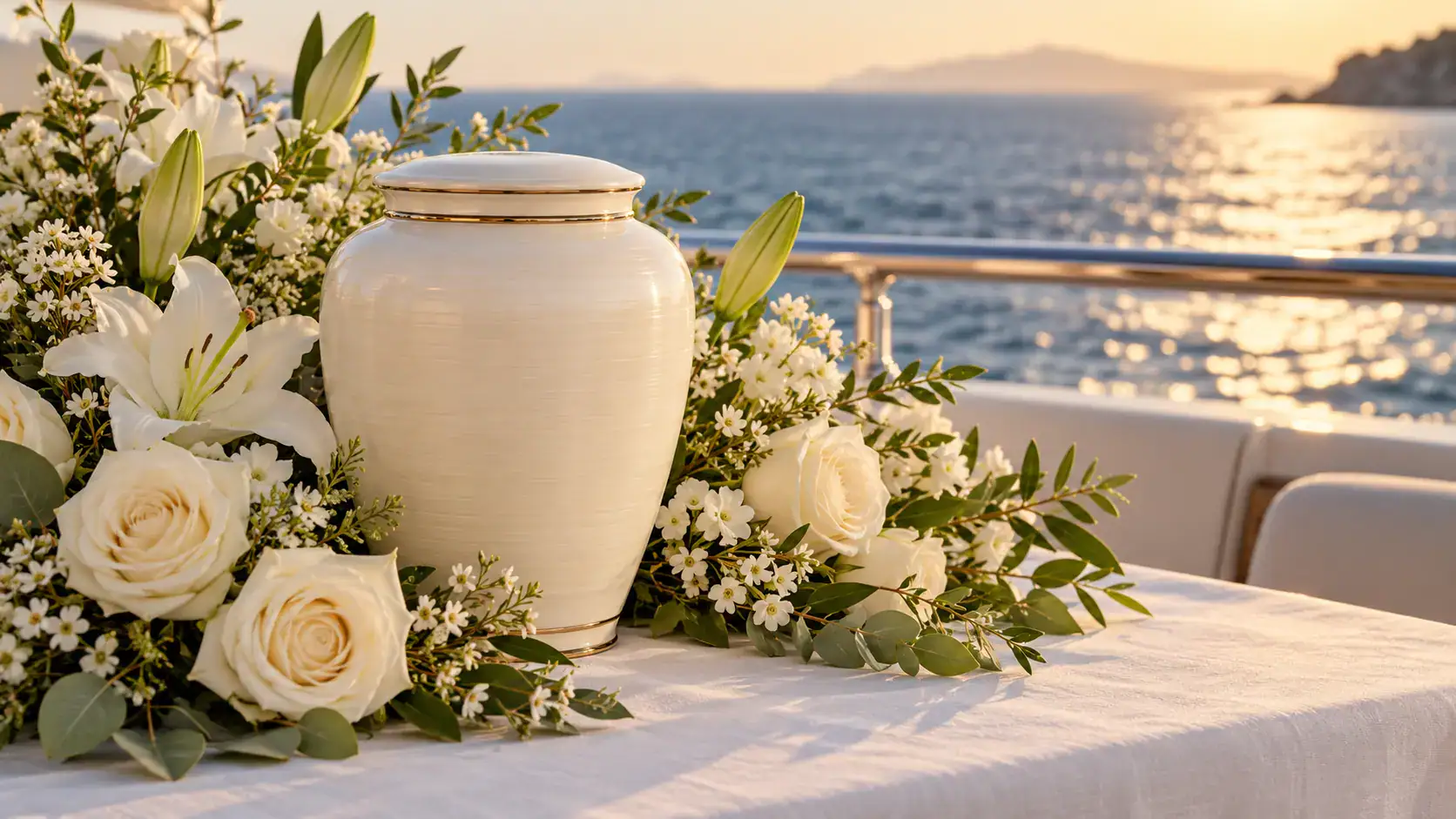
Marina del Rey is North America’s largest man-made small-craft harbor, with more than 5,000 boats and a protected basin that opens directly onto Santa Monica Bay. That geography matters for a memorial: the harbor cruise is calm, the coastline views are continuous, and the open water is minutes away for a scattering if the family wants one. A chartered yacht also removes the three logistics that make land venues stressful — guests arriving late, guests leaving early, and a room that is either too empty or too crowded. Everyone boards together, stays together, and disembarks together.
FantaSea Yachts operates three vessels from Marina del Rey, so the venue can be sized to the guest list rather than the other way around. Choosing the right yacht rental in Marina del Rey starts with an honest headcount:
| Yacht | Capacity | Best suited for |
| Admiral XL | Up to 12 guests | Immediate family; a private scattering with a short reading and a toast |
| Dandeana | Up to 100 guests | Extended family and close friends; story hour, seated meal, memory table |
| FantaSea One | Up to 250 guests | Community-scale gatherings — colleagues, congregations, large families; full program with open mic |
Every charter includes the vessel, a professional crew, and an event producer who handles timing, catering, and the tribute moment, so the family can be present instead of managing the room. The same team coordinates yacht party celebrations of every kind, which means the service is practiced, not improvised.
How to Plan a Celebration of Life: 7 Steps
Most families plan a celebration of life in three to five weeks. These steps follow that timeline.
- Pick a date two to eight weeks out. There is no legal clock once cremation is complete. Choose a weekend afternoon if out-of-town relatives need to travel, and avoid major holidays unless the date itself is meaningful.
- Set the headcount before the venue. Count the people the person saw regularly in the last five years, then add 20% for partners and plus-ones. Most celebrations fall into one of three bands: under 15 (immediate family), 30–100 (family and friends), or 100–250 (community).
- Choose a venue that fits the headcount comfortably. A 40-person gathering in a 250-person hall feels hollow; 120 people in a 100-person restaurant feels frantic. Match the band to the room — for a yacht, that means 12, 100, or 250.
- Build a 2½-hour program. A reliable template: 0:00 arrival and welcome, 0:20 story hour, 1:00 meal, 1:40 tribute moment (toast, scattering, or video), 2:00 open mic and memory jar, 2:30 close. Write it down and give it to one host.
- Decide what role the remains play. Options are a scattering during the event, an urn displayed on the memory table, or no remains present. If scattering at sea, confirm with the operator that the itinerary reaches at least three nautical miles from shore and who will file the 30-day EPA notice.
- Invite with clear expectations. State the tone (“a celebration, not a service”), the dress code, whether children are welcome, and the end time. Guests behave according to what the invitation tells them; vague invitations produce a room full of people in black who are unsure whether to laugh.
- Assign a host and a photographer. The host keeps the program moving and introduces speakers. The photographer — a friend with a good phone is fine — captures the day, because the family will not remember most of it.
Scattering Ashes at Sea in California: What Families Should Know
Releasing cremated remains in the ocean is legal and common, and it does not require a permit application or fee. It does require following the federal general permit administered by the U.S. Environmental Protection Agency, which sets four rules:
- The release must take place at least three nautical miles from shore (about 3.45 statute miles). Cremated remains may be released in ocean water of any depth.
- Only readily decomposable flowers and wreaths may be placed in the water. No plastic flowers, synthetic ribbon, metal, or any container that floats or does not break down.
- Pet remains cannot be included or mixed with human cremated remains under the general permit.
- The EPA must be notified within 30 days of the event, using its online Burial at Sea Reporting Tool. No death certificate or other documentation is required to file.
States may not relax the three-mile rule for ocean waters, though they can regulate scattering in bays, lakes, and rivers separately. In practice, the most important question for a family is simply who will handle the reporting — ask your charter operator before the day.
One practical note that catches families off guard: wind. Release cremated remains from the leeward (downwind) side of the vessel, low to the water, and let the crew position the boat. A water-soluble urn that is lowered rather than poured avoids the problem entirely and is permitted as long as it contains no plastic.
Frequently Asked Questions About Celebration of Life Ideas
What is a celebration of life?
A celebration of life is an informal, personalized gathering held to honor someone who has died. Unlike a traditional funeral, it usually has no religious liturgy, no casket present, and no fixed script. Families choose the location, tone, music, food, and activities to reflect the person’s personality, and it is often held weeks after the death rather than within a few days.
How long after someone dies should you hold a celebration of life?
Most families hold a celebration of life two to eight weeks after the death, and some wait several months to coincide with a birthday, anniversary, or a season the person loved. Because the body is not present and cremation has usually already taken place, there is no medical or legal reason to rush. Choose a date that gives out-of-town family time to travel.
Can you have a celebration of life without the body or ashes present?
Yes. Many celebrations of life take place with no remains present at all. Families often display photographs, a memory table of personal items, or a video montage instead. If cremated remains are part of the plan, they can be displayed in an urn, scattered during the event, or kept privately by the family.
What do you wear to a celebration of life?
Dress is set by the family, and it is usually less formal than a funeral. Smart casual or business casual is the safe default. Many families ask guests to wear the person’s favorite color, team colors, or bright clothing instead of black. If the invitation does not specify, choose neat, understated clothing in muted or soft colors and avoid anything you would wear to a party.
How long should a celebration of life last?
Plan on two to three hours. A typical structure is 20 minutes of arrival and mingling, 30 to 45 minutes of shared stories or a short program, a meal or refreshments, a toast or tribute moment, and open time for guests to talk. Events shorter than 90 minutes feel rushed, and events longer than four hours tend to lose energy.
Is it legal to scatter ashes in the ocean in California?
Yes, under the federal general permit administered by the U.S. Environmental Protection Agency. Cremated remains may be released in ocean waters of any depth as long as the vessel is at least three nautical miles from shore. Only readily decomposable flowers or wreaths may be placed in the water, no plastic or metal items are allowed, and the EPA must be notified within 30 days of the event. There is no application or fee required beforehand.
How many people usually attend a celebration of life?
Attendance ranges widely, from a dozen immediate family members to several hundred friends, colleagues, and community members. A useful planning rule is to count the people the person saw regularly in the last five years, then add 20 percent for plus-ones. Pick a venue sized to that number so the room never feels empty or overcrowded.
What is the difference between a memorial service and a celebration of life?
A memorial service is typically a structured, often religious service held without the body present, usually led by clergy or a funeral director. A celebration of life is informal and personality-driven, led by family or friends, with music, food, stories, and activities chosen to reflect the person. Many families use the terms interchangeably, but the celebration of life is generally lighter in tone and more flexible in format.
Plan a Celebration of Life in Marina del Rey
If the person you are honoring loved the ocean, the skyline, or simply a good gathering with the people they cared about, a sunset cruise from Marina del Rey may be the most fitting tribute you can give them. FantaSea Yachts has hosted private celebrations on the water since 1980. Request information or call (310) 827-2220 to speak with an event producer about dates, guest counts, and what is possible for your family.

Related Posts


BLOG

October 12, 2026